Always-on validation for JS-supplied pointer+length pairs at the WASM boundary. More...
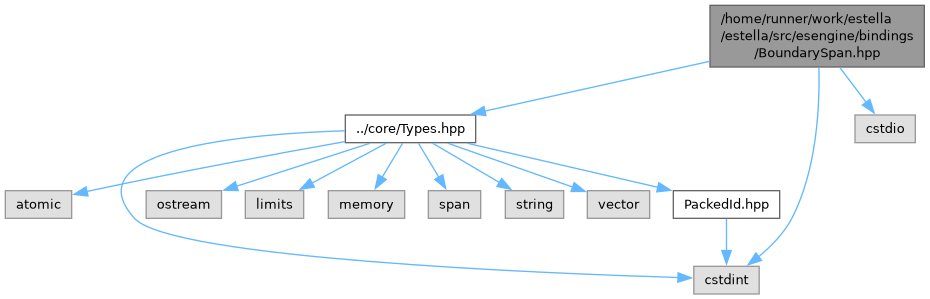

Go to the source code of this file.
Namespaces | |
| namespace | esengine |
| namespace | esengine::detail |
Functions | |
| bool | esengine::detail::boundaryContains (uintptr_t ptr, u64 bytes, uintptr_t *base, u64 *size) |
| void | esengine::setBoundaryRegion (uintptr_t base, usize size) |
| Declare the region a native host lets JS address (its heap arena). | |
| template<typename T> | |
| const T * | esengine::boundarySpan (uintptr_t ptr, u64 count, const char *what) |
Validates a JS-supplied pointer to count elements of T and returns it typed. | |
| template<typename T> | |
| T * | esengine::boundarySpanMut (uintptr_t ptr, u64 count, const char *what) |
| Mutable variant of boundarySpan, for entry points that WRITE into a JS buffer. | |
Variables | |
| uintptr_t | esengine::detail::g_boundaryBase = 0 |
| usize | esengine::detail::g_boundarySize = 0 |
Detailed Description
Always-on validation for JS-supplied pointer+length pairs at the WASM boundary.
A uintptr_t + count from JS is a bare claim about linear memory. Trusting it blindly lets a wrong count (or a 0 from a failed malloc / an undefined that coerced) read garbage or — on write paths — silently corrupt unrelated engine state inside the sandbox. These helpers are the single boundary gate: null-checked, overflow-checked, and range-checked against the actual wasm heap size. They are ALWAYS ON (never compiled out in release); on failure they log and return nullptr so the entry point degrades instead of hitting UB.
- Date
- 2026
- Copyright
- Copyright (c) 2026 ESEngine Team Licensed under the Apache License, Version 2.0.
Definition in file BoundarySpan.hpp.
